 |
 |
| EDITORIAL TEAM |
| REVIEWER |
| REGISTER AS A REVIEWER |
| FOCUS AND SCOPE |
| AUTHOR GUIDELINES |
| CONTACT US |
| PUBLICATION ETHICS |
| OPEN ACCESS POLICY |
| PUBLICATION FEE |
| LETTER OF ACCEPTANCE (LOA) |
| TEMPLATE |
 |
|
|

Pedagogical Education and Review of Linguistics (PEARL) is a scholarly journal that provides a platform for publishing research and academic studies in linguistics, language education, and language use in contemporary social and educational contexts. PEARL welcomes scholarly works that examine diverse linguistic phenomena from theoretical, pedagogical, and sociocultural perspectives.
The published articles cover a range of topics, including Indonesian language learning, sentence effectiveness, prokem language, sociolinguistic registers, digital communication, social media, language use among adolescents, and the development of language creativity among Generation Z. These studies highlight the dynamic relationship between language, society, digital technology, and education, particularly in the context of contemporary Indonesian language use.
Through a rigorous peer-review process, PEARL is committed to publishing high-quality scholarly works that contribute to the advancement of linguistic knowledge and innovative practices in language education. The journal aims to foster academic dialogue and provide insights into the evolving nature of language in educational, social, and digital environments.
Explore our published issues below.
Dear Author,
We cordially invite you to contribute to Pedagogical Education and Review of Linguistics (PEARL),
an academic journal that focuses on research in the field of educational linguistics. The journal aims to serve as a forum for discussion, analysis, and the dissemination of the latest findings on the relationship between language and teaching.
We welcome original articles from researchers, academics, and practitioners on topics including, but not limited to:
Language teaching theories and practices
The use of technology in linguistic learning
Applications of linguistics in multilingual education
Linguistics-based curriculum development
Language policy analysis in educational contexts
All submitted manuscripts will undergo a peer-review process to ensure their quality and contribution to the advancement of educational linguistics. We hope that your work will provide new insights for the academic community and practitioners alike.
The submission deadline for the upcoming issue is 30 August 2026. Detailed information regarding author guidelines and submission procedures is available on the official website of Pedagogical Education and Review of Linguistics or may be requested via email at: journals.pearl@gmail.com.
We look forward to receiving your valuable contributions.
Warm regards,
The Editorial Team
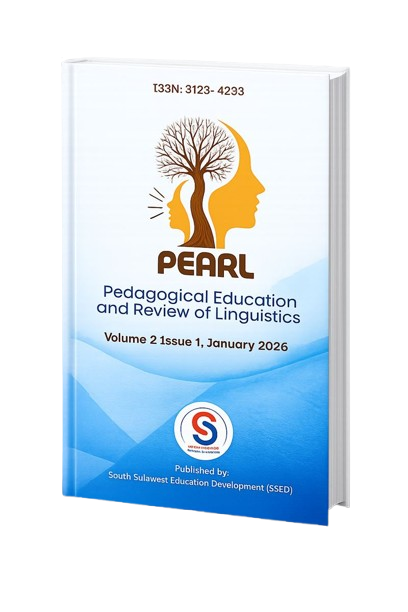
Pedagogical Education and Review of Linguistics (PEARL) proudly presents Volume 2, Issue 1 (January 2026), which brings together peer-reviewed articles addressing contemporary issues in educational linguistics and language learning. This issue features scholarly contributions from researchers affiliated with Universitas Islam Negeri Palopo, Universitas Pekalongan, and Universitas Mataram, Indonesia, reflecting the growing diversity and vitality of linguistic research in the region.
The articles in this issue explore innovative pedagogical practices and linguistic phenomena across educational and digital contexts. One study investigates the design of culturally grounded digital storytelling as an instructional medium for teaching short story writing at the senior high school level. Another article examines the use of Wordwall-based educational games to improve learners’ Arabic vocabulary acquisition. Additionally, this issue presents an analysis of semantic change and its determining factors as observed in the Instagram comment section of @najwashihab. The final contribution offers a generative morphological analysis of the Indonesian nasal prefix /ŋ-/ as used in social media discourse.
Collectively, these studies contribute to ongoing scholarly discussions by integrating linguistic theory, educational practice, and digital communication. PEARL remains committed to promoting high-quality research that advances understanding in linguistics and language education while fostering dialogue among researchers, educators, and practitioners at both national and international levels.
The editorial team extends its sincere appreciation to the authors and reviewers for their valuable contributions and dedication to academic excellence.
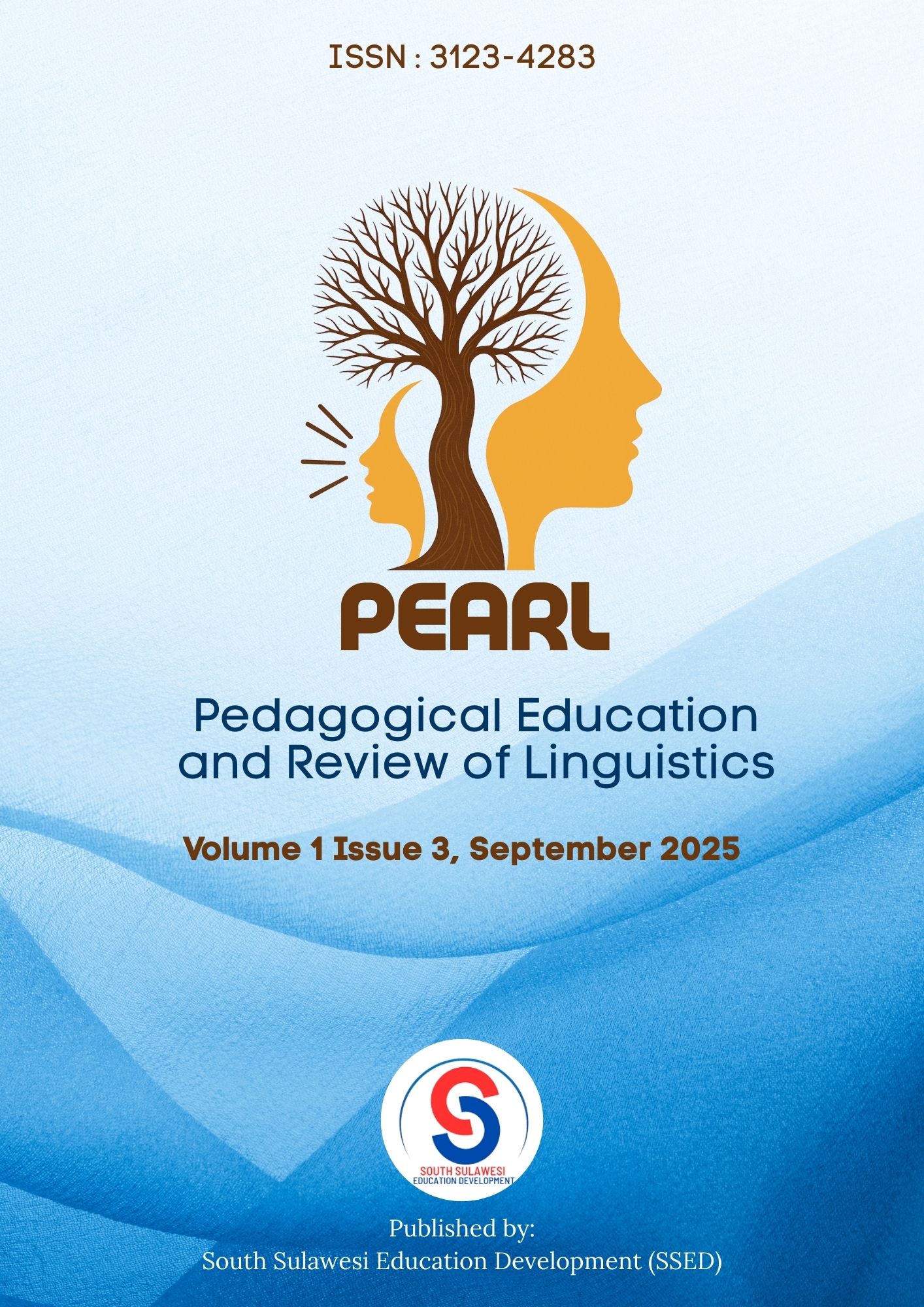
Pedagogical Education and Review of Linguistics is pleased to publish Vol. 3 No. 1, September 2025, which presents a collection of scholarly works in the field of educational linguistics and language learning. In this edition, the authors offer studies that are highly relevant to current developments in language pedagogy, particularly in relation to Arabic language instruction, speaking skills, and the development of language learning media.
Each article included in this issue has undergone a rigorous review process to ensure its academic quality and its contribution to the advancement of literature in educational linguistics. We hope that the findings and analyses presented will provide new insights and enrich language teaching practices across various educational levels.
The Editorial Team extends its sincere appreciation to the authors, reviewers, and all parties who have supported the publication of this issue. We hope that this edition will serve as a valuable reference for academics, researchers, and education practitioners.
Happy reading.
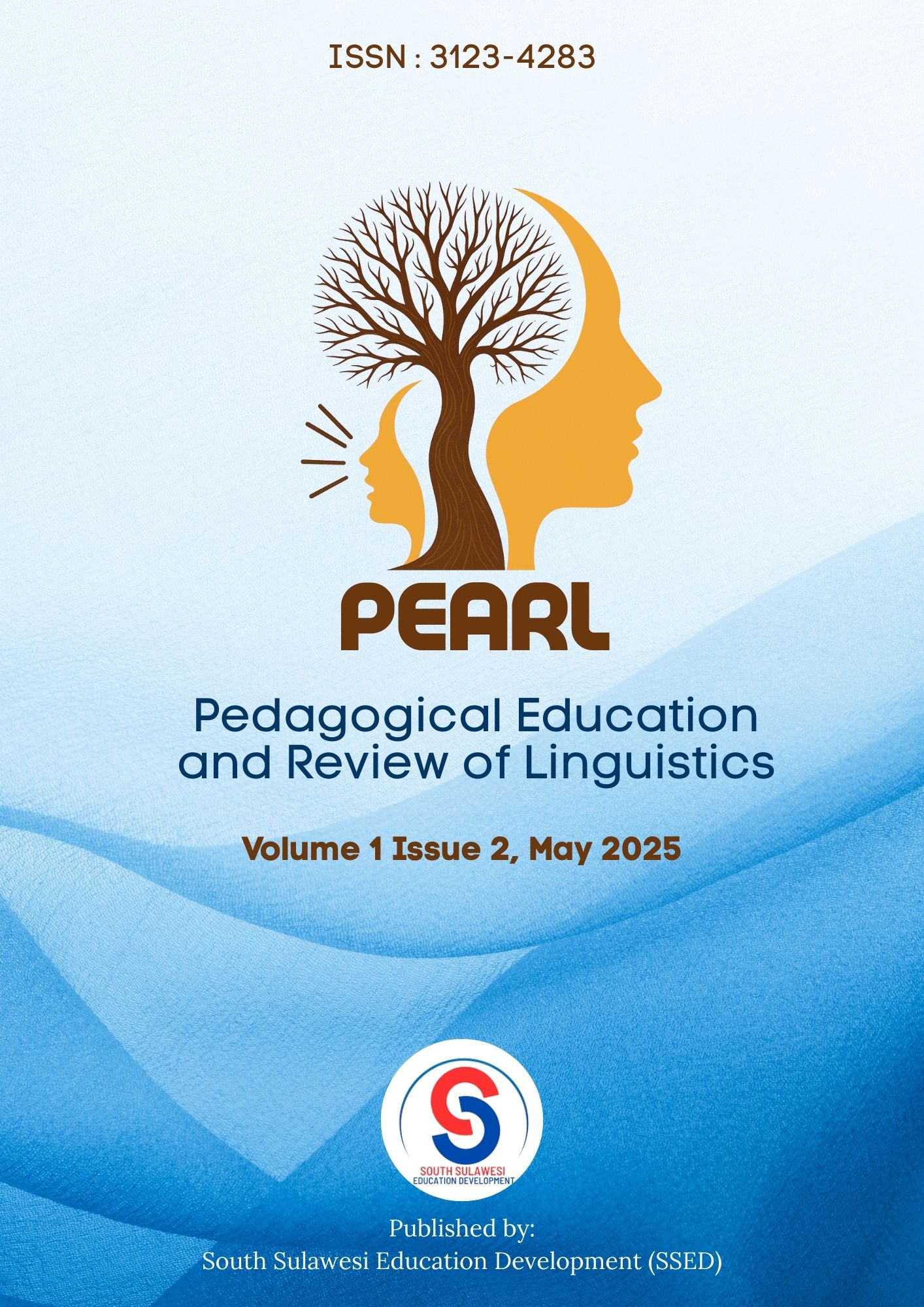
Journal Pedagogical Education and Review of Linguistics Vol. 1 No. 2, May 2025 presents five inspiring articles that thoroughly explore innovations, strategies, and the latest developments in the field of education. This edition offers a variety of perspectives that enrich readers' understanding of diverse approaches in language learning. The articles are authored by contributors from several educational institutions, including IAIN Palopo, MAN Palopo, MTS Assalam Salu Induk, and SMPIT Ibnu Sina Palopo. Each piece offers fresh insights and practical methods that can be implemented in everyday educational practices. The presence of this journal provides a significant contribution not only for educational practitioners but also for researchers and educators interested in delving deeper into current trends in relevant language teaching. With a focus on the development and enhancement of learning quality, this journal serves as a vital reference for anyone seeking to stay updated with the dynamic and increasingly adaptive landscape of education.
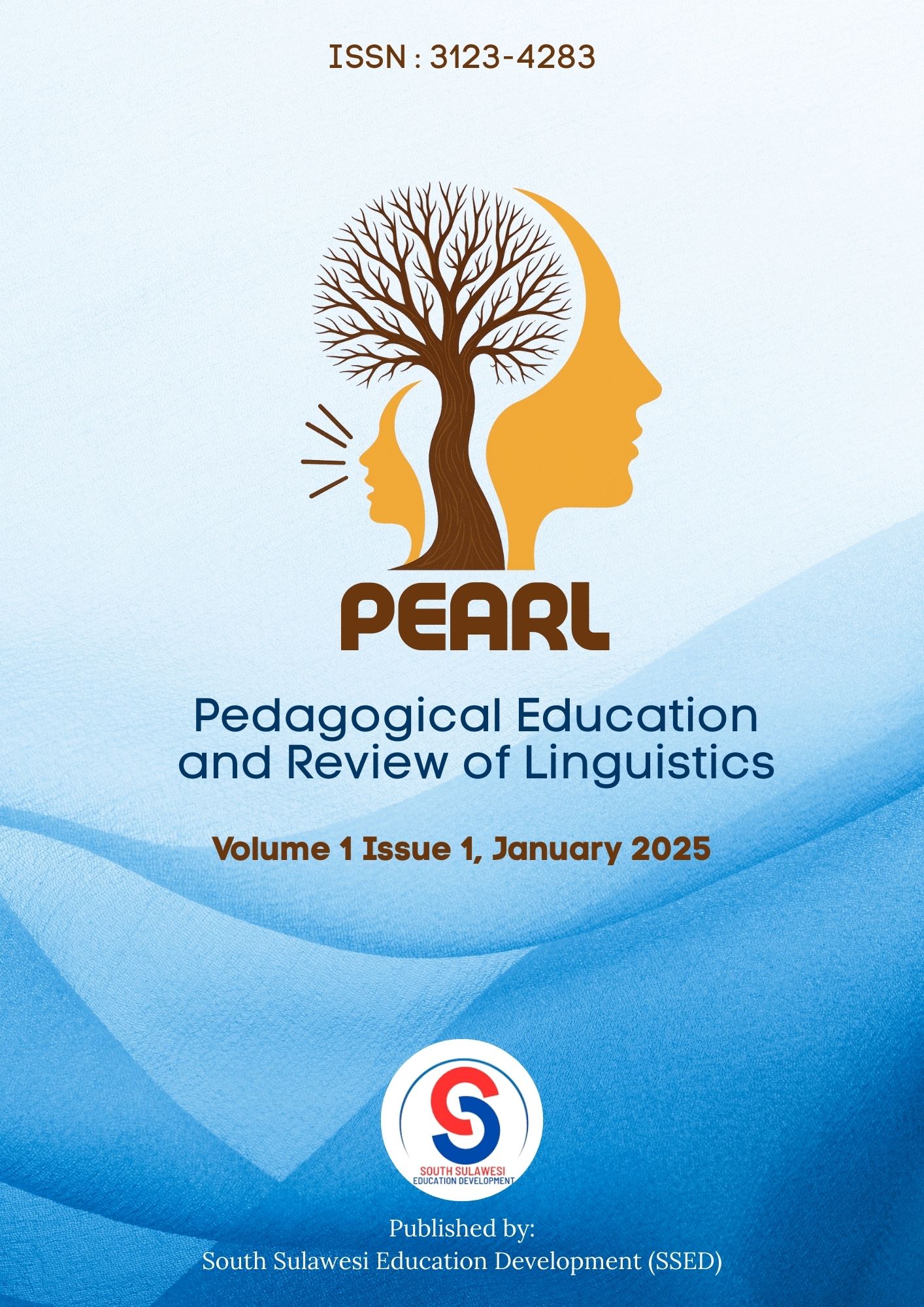
Journal Pedagogical Education and Review of Linguistics Vol. 1 No. 1 January 2025 published five inspiring articles that explore the latest innovations and strategies in the world of education. This inaugural issue offers deep insights into how paired storytelling techniques and hand puppet media can enhance students' storytelling skills, the development of contextualized pictorial word card media to support reading learning, and the use of mixed Luwu-Indonesian language in the primary school environment. In addition, these articles also highlight college students' ability to construct passive sentences in German and the effectiveness of literacy camps in improving students' reading skills. Written by seven authors from Makassar State University and IAIN Palopo, this journal provides valuable contributions for practitioners, researchers, and educators aiming to understand current trends and methods in language and literacy learning.

SOUTH SULAWESI EDUCATION DEVELOPMENT
Jl. Makkarani Komp. Green Riyousa Blok E. No 12. A
Gowa Sulawesi Selatan, Indonesia
Website: https://ssed.or.id/


