
South Sulawesi Education Development (SSED) manages an open-access journal publishing platform dedicated to supporting scholarly publication in education, social sciences, Islamic education, linguistics, early childhood education, and community development.
This platform hosts peer-reviewed journals committed to academic quality, editorial integrity, and wider dissemination of research findings.
Journals
-
Socratika: Journal of Progressive Education and Social Inquiry
Socratika: Journal of Progressive Education and Social Inquiry is an open-access scholarly journal published by South Sulawesi Education Development (SSED) . It publishes original and high-quality works in progressive education and contemporary social inquiry, including educational innovation, technology, policy, culture, community development, and interdisciplinary social research.
Socratika is published three times a year and applies a double-blind peer-review process involving at least two independent reviewers. All articles are immediately open access under the CC BY 4.0 License .
OPEN FOR SUBMISSIONS
Call for Papers
Volume 3, Number 3
September–December 2026Socratika invites academics, researchers, and practitioners to submit original research articles for this issue.
After submitting your manuscript:
-
-
Indonesian Journal of Islamic Educational Review
Indonesian Journal of Islamic Educational Review
Advancing Education Research GloballyIJIER is an international peer-reviewed scientific journal managed and published by South Sulawesi Education Development (SSED). The journal publishes high-quality original research articles and theoretical studies in the broad field of education, including teaching and learning, curriculum development, instructional methods, learning media, educational technology, educational management, educational assessment, teacher professional development, educational policy, and Islamic education. IJIER serves as a scientific platform for researchers, academics, educators, and practitioners worldwide to disseminate innovative research and educational practices.
ISSN 3047-0706 Frequency Thrice a Year February, June, October Editor-in-Chief Muh Yamin Publisher South Sulawesi Education Development (SSED) National Accreditation
The Indonesian Journal of Islamic Educational Review (IJIER) has been nationally accredited at SINTA 3 based on the Decree of the Director General of Science and Technology, Ministry of Higher Education, Science and Technology of the Republic of Indonesia Number 355/DST/D.D1/HM.01.01/2026.Focus and ScopeEducation and Learning • Curriculum Development • Teaching and Learning • Instructional Methods • Learning Media • Educational Technology • Educational Innovation • Educational Management • Assessment and Evaluation • Teacher Professional Development • Educational Policy • Character Education • Islamic Education • School Education • Higher Education StudiesBefore Make a SubmissionOriginal & Unpublished IJIER Template Similarity Check (Turnitin) Citation: Mendeley • Zotero Submit Now
Manuscripts must comply with the journal guidelines, focus and scope, publication ethics, and author instructions. -
Pedagogical Education and Review of Linguistics
Overview: "Pedagogical Education and Review of Linguistics" is a premier academic journal dedicated to bridging the gap between linguistic theory and its application in educational settings. PEARL serves as a nexus for educators, linguists, and practitioners who seek to understand the interplay between linguistics and pedagogy.
Aims and Scope: PEARL endeavors to publish high-quality, original research articles, reviews, and case studies that address the challenges and opportunities presented when linguistic theory meets classroom practice. Our scope covers:
- The practical application of phonetics, syntax, semantics, and pragmatics in teaching.
- Innovations in teaching methodologies derived from linguistic research.
- Case studies showcasing successful integration of linguistics in language education.
- Reviews of instructional materials, tools, and technology grounded in linguistic principles.
Audience: Our readership includes language educators, applied linguists, curriculum designers, teacher trainers, and educational policymakers. PEARL is essential reading for those at the forefront of integrating linguistic knowledge into the classroom.
Publication Frequency: PEARL is published biannually, with special issues occasionally released in response to current trends or emerging topics in pedagogical linguistics.
Peer Review: All submissions undergo a rigorous double-blind peer review, ensuring the publication of only the most impactful and relevant research in the field of pedagogical linguistics.
Journal title : Pedagogical Education and Review of Linguistics Abbreviation : PEARL Template : Template Frequency : 3 issues per year (January, May, and September) DOI : - Online ISSN : 3123-4283 Language : English/Indonesian Editor-in-chief : Sukmawaty Publisher : South Sulawesi Education Development (SSED) Citation Analysis : Google Scholar, Garuda -
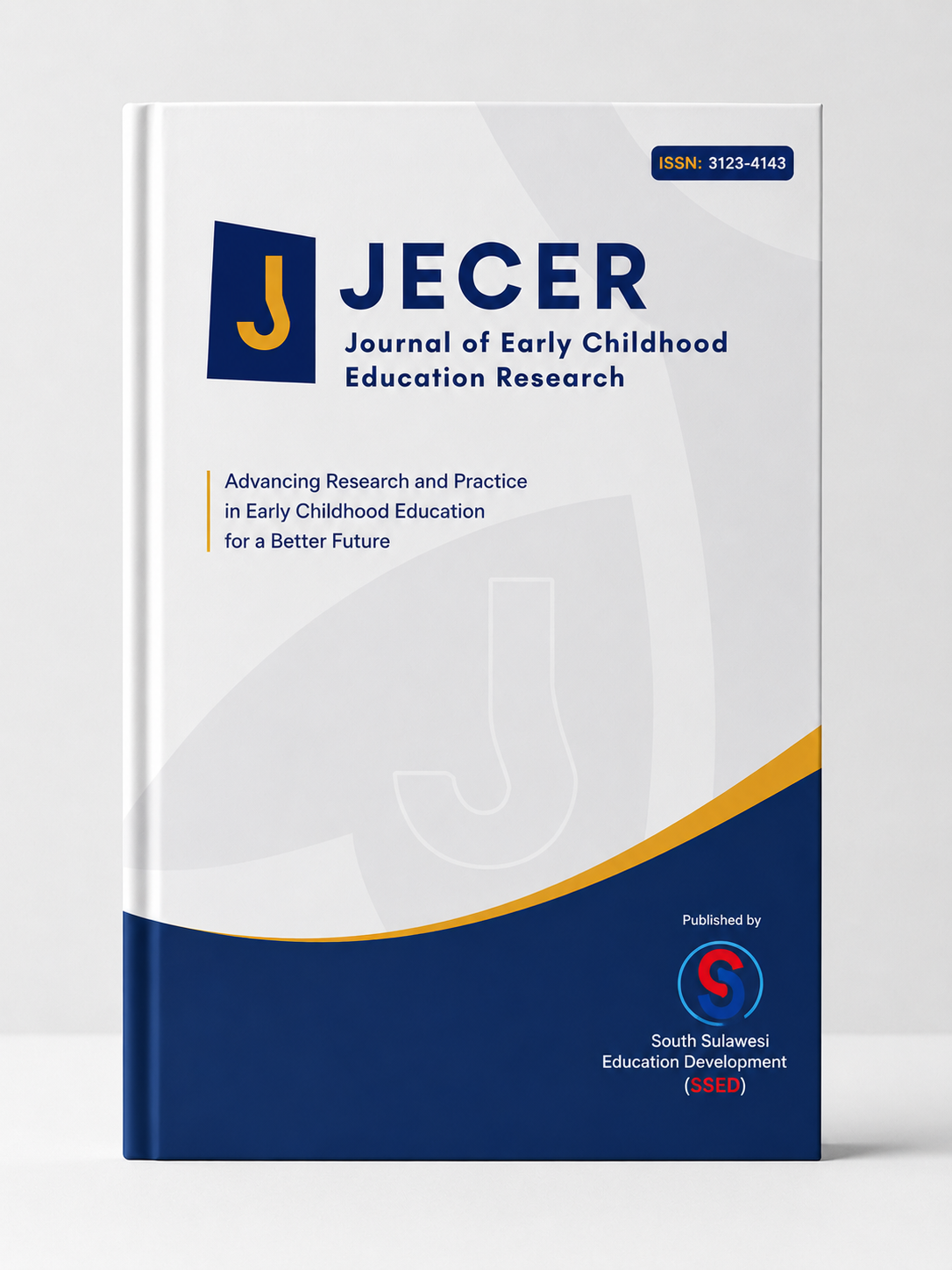
Journal of Early Childhood Education Research
Journal of Early Childhood Education Research (JECER) is a double-blind peer-reviewed open access journal dedicated to publishing high-quality original research, review articles, and scholarly works in the field of early childhood education. The journal provides a platform for researchers, educators, practitioners, and scholars to disseminate innovative ideas and evidence-based findings related to child development, learning and teaching practices, parenting, educational management, assessment, instructional media, educational technology, curriculum development, and other relevant issues in early childhood education. JECER aims to contribute to the advancement of knowledge, practice, and policy by promoting rigorous and meaningful research that supports the quality and continuous development of early childhood education.
Journal InformationJournal Name Journal of Early Childhood Education Research Initials JECER Abbreviation J. Early Child. Educ. Res. e-ISSN 3123-4143 DOI Prefix 10.58230 by Crossref Frequency Twice a year (April and October) Language English Peer Review Double-Blind Peer Review Editor in Chief (EIC) Subhan Publisher South Sulawesi Education Development (SSED) Before Making a Submission
Manuscripts must be original, unpublished, and not being considered for publication elsewhere at the time of submission to Journal of Early Childhood Education Research (JECER). Authors must ensure that the submitted manuscript has been prepared using the official JECER Template. The manuscript must also have been checked for similarity using Turnitin. Reference writing should use citation management tools such as Mendeley, Zotero, or EndNote. Any manuscript that does not meet the guidelines for authorship, focus and scope, required format, or administrative requirements will be immediately rejected. Only manuscripts that meet the standards of Journal of Early Childhood Education Research (JECER) will be processed further.
Contact & Submission Email:
Subhan / 087865093669 / subhan@uinpalopo.ac.Indexing and Abstracting Services
Journal of Early Childhood Education Research (JECER) has been indexed and included in several academic indexing and abstracting services. These services enhance the visibility, accessibility, and dissemination of published research articles, allowing researchers, academics, and readers to discover scientific publications more effectively.
The following indexing services provide access to published articles from this journal. Click on the logos below for further information.
Indexing Services contribute to improving the academic visibility, discoverability, and accessibility of articles published in this journal. Through these platforms, published research can reach a wider academic community and support the exchange of knowledge in the field of early childhood education. -
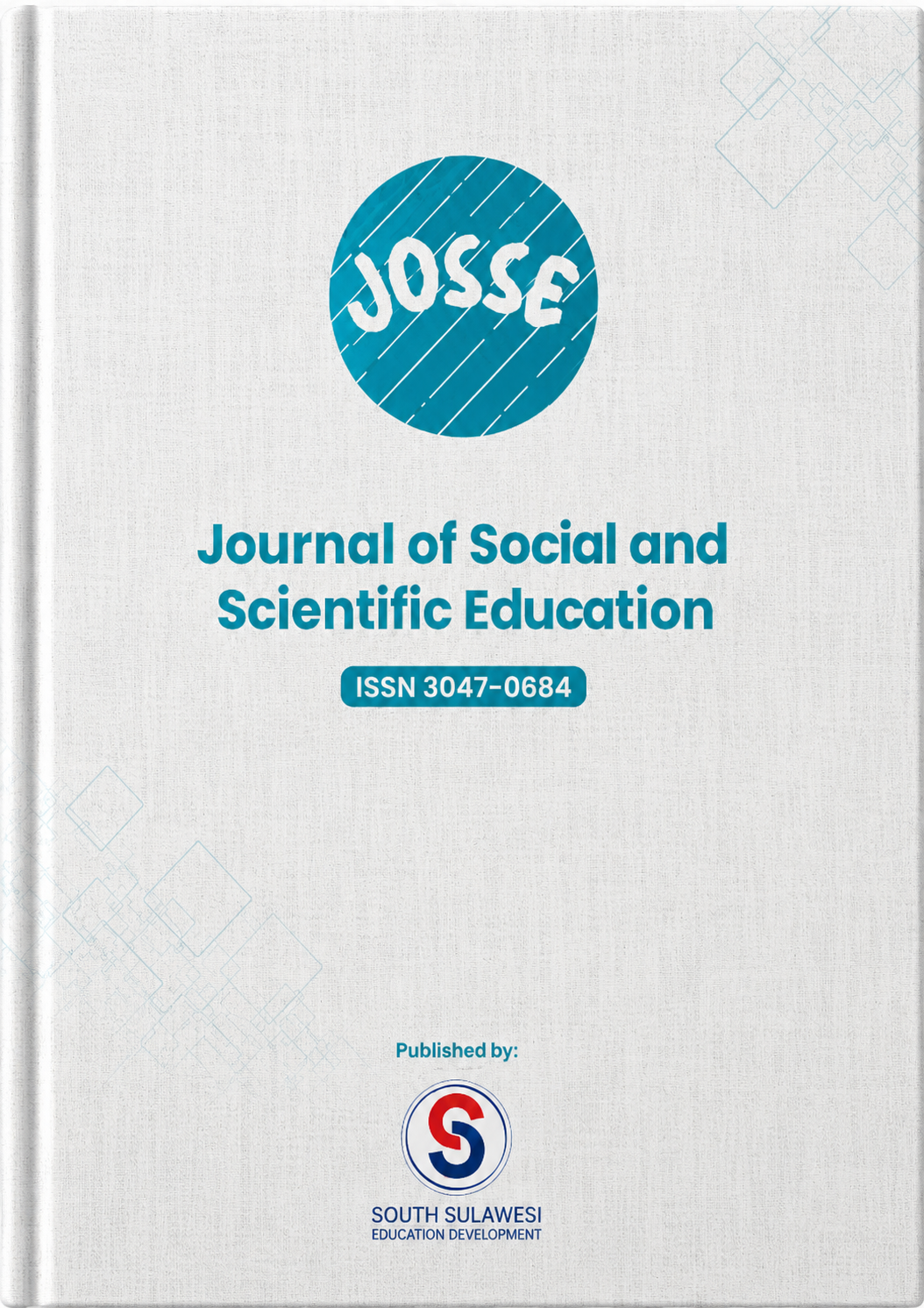
Journal of Social and Scientific Education
Journal of Social and Scientific Education
JOSSE is a scientific publication media managed and published by South Sulawesi Education Development (SSED). The journal presents research results and theoretical studies in the field of education, serving as a reference and publication means for teachers, lecturers, students, school supervisors, policymakers, and education observers.
Focus and Scope
Journal of Social and Scientific Education publishes research results and theoretical studies in the field of education as a reference source as well as a means of publication for teachers, lecturers, students, school supervisors, school policy makers, and education observers, with the following scope of study:
Education Management Learning Material Development Evaluation of Education Teacher Professional Development Learning Activities Education Policy Educational Facilities and InfrastructureBefore Make a Submission
Manuscripts must be original, unpublished, and not being considered for publication elsewhere at the time of submission to JOSSE. The author must ensure that the submitted manuscript has been prepared using the JOSSE Template. Manuscripts must also have been corrected with a similarity check (similarity check or Turnitin). Reference writing must use citation manager tools such as Mendeley, Zotero, EndNote, Ref-Works, Bib-Text, etc.
Any manuscript that does not meet the author's guidelines, focus, and scope, that is written in a different format, and does not meet the administrative requirements will be immediately rejected. The only manuscript that meets JOSSE standards will be further processed.

